
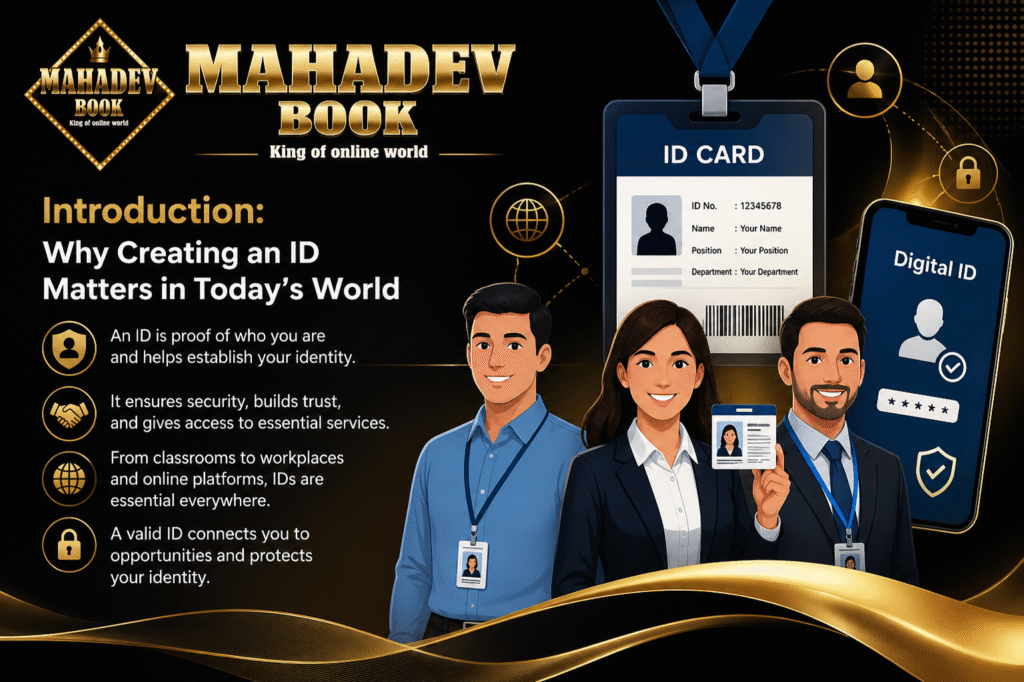
Introduction: How to Create ID Matters in Today’s World
In today’s fast-moving and highly connected world, having a valid identification (ID) is more important than ever before. Whether you are a student, a working professional, or someone accessing online services, an ID acts as proof of who you are. It helps establish your identity, ensures security, and allows you to access essential services without unnecessary complications. From opening a bank account to entering an office building or even signing up for a website, an ID plays a crucial role in everyday life.
At its core, an ID is more than just a card or a username—it represents your presence in a system. In the physical world, IDs such as school cards, employee badges, or government-issued documents help organizations verify individuals quickly and efficiently. Without them, managing records, maintaining security, and ensuring accountability would become extremely difficult. Imagine trying to enter a workplace or attend a class without any form of identification; it would create confusion and potential security risks.
In the digital space, IDs have taken on a whole new level of importance. Every time you create an account on a website or app, you are essentially creating a digital identity. This digital ID allows you to interact with platforms, store personal data, and access services tailored specifically to you. With the rise of online banking, e-commerce, and remote work, having a secure and well-managed digital ID has become essential. It not only simplifies access but also protects your personal information from unauthorized use.
Another important aspect of IDs is trust. Organizations, institutions, and even individuals rely on IDs to confirm that someone is genuine. For example, employers use ID cards to identify staff members, while educational institutions issue IDs to students for attendance, exams, and campus access. Similarly, online platforms use login credentials to ensure that only authorized users can access certain features. In all these cases, IDs act as a bridge between identity and trust.
Creating an ID might seem like a simple task, but it requires careful attention to detail. The information provided must be accurate, up-to-date, and consistent. Even a small mistake in spelling or numbers can lead to issues later on, especially when the ID is used for official purposes. Additionally, the design and format of physical IDs should be clear and professional, making it easy to read and verify information at a glance.
Security is another key factor to consider when creating an ID. In physical IDs, features like photographs, barcodes, or holograms are often used to prevent duplication or misuse. In digital IDs, strong passwords, verification codes, and two-factor authentication add layers of protection. These measures are important because identity theft and unauthorized access are real concerns in both physical and digital environments.
It is also worth noting that the process of creating an ID can vary depending on its purpose. A government-issued ID may involve official documentation and verification procedures, while a student or employee ID might be created internally by an institution. On the other hand, digital IDs are usually created instantly through online registration forms. Despite these differences, the basic goal remains the same: to establish a reliable and verifiable identity.
As technology continues to evolve, the concept of identification is also changing. Digital IDs are becoming more advanced, with features like biometric authentication and cloud-based access. However, the fundamental importance of having a valid ID remains unchanged. It continues to be a key requirement for participation in modern society.
In this guide, we will explore the different ways to create various types of IDs, including government, institutional, and digital forms. By understanding the purpose and process behind each type, you will be better prepared to create an ID that is both effective and secure.
Types of ID Cards You Can Create
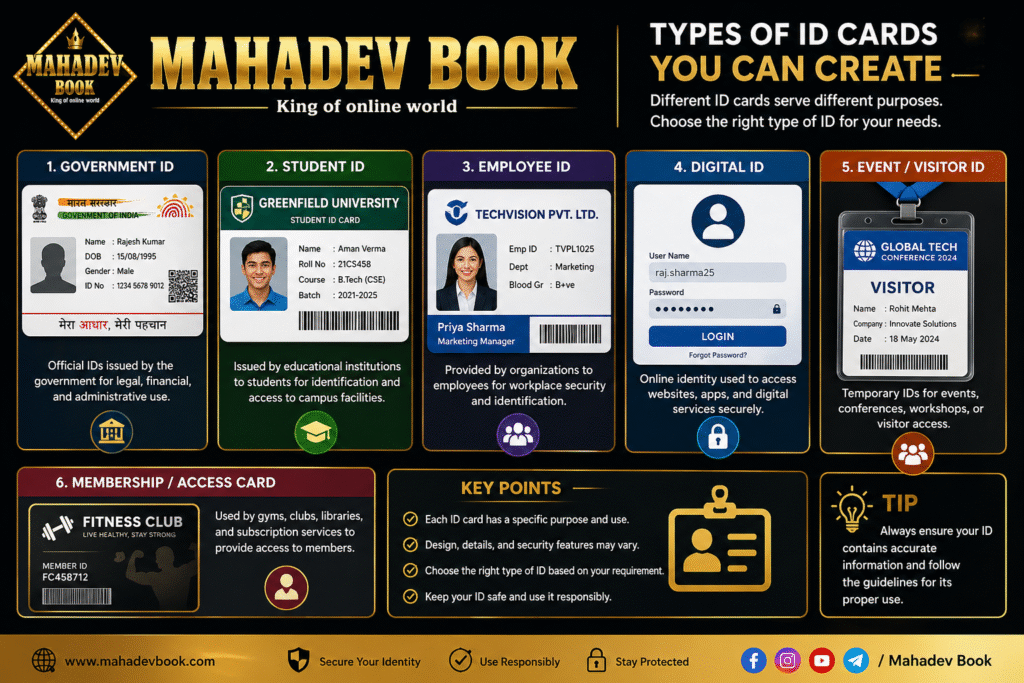
Before you begin creating an ID, it’s important to understand that not all ID cards serve the same purpose. Different environments require different types of identification, and each one is designed with specific features to meet those needs. Knowing which type of ID you need will help you choose the right process, tools, and information required to create it effectively.
One of the most commonly recognized types is the government-issued ID. These include documents such as national identity cards, passports, and driving licenses. They are considered official proof of identity and are often required for legal, financial, and administrative purposes. Creating this type of ID usually involves a formal application process, where you must provide verified documents like proof of address, date of birth, and sometimes biometric data. Since these IDs are used at a national or even international level, they come with strict guidelines and security features to prevent misuse or duplication.
Another widely used category is the student ID card. Educational institutions issue these cards to students for identification within the campus. A student ID typically contains details such as the student’s name, photograph, roll number, course, and institution name. These cards are not just for identification—they often provide access to facilities like libraries, laboratories, exams, and sometimes even transportation services. Creating a student ID is usually handled by the school or college administration, but the design and layout can vary depending on the institution’s branding and requirements.
Similarly, employee ID cards are essential in professional environments. Companies issue these cards to their staff to maintain security and organization within the workplace. An employee ID usually includes the employee’s name, designation, department, employee number, and a photograph. In many organizations, these cards also function as access badges, allowing entry into office premises or restricted areas. When creating employee IDs, businesses often focus on both functionality and design, ensuring the card reflects the company’s identity while remaining easy to read and verify.
In addition to physical cards, digital IDs have become increasingly important in recent years. A digital ID is essentially an online identity that allows users to access websites, applications, and services. This could be as simple as a username and password combination or more advanced systems that include multi-factor authentication. Digital IDs are widely used in online banking, e-commerce platforms, social media, and work-related tools. Unlike physical IDs, they can be created instantly, but they require strong security measures to protect personal data.
There are also temporary or event-based IDs, which are often overlooked but equally important. These IDs are created for short-term use, such as conferences, seminars, workshops, or visitor access in offices. They typically include basic information like name, organization, and event details. While they may not require the same level of security as permanent IDs, they still play a crucial role in managing access and ensuring safety during events.
Another category worth mentioning is membership or access cards. These are used by gyms, clubs, libraries, or subscription-based services. They help organizations track members and provide access to specific services or facilities. These IDs may include barcodes, QR codes, or magnetic strips for quick scanning and verification.
Each type of ID card has its own purpose, design elements, and level of complexity. For example, a government ID focuses heavily on security and authenticity, while a student or employee ID balances identification with usability. Digital IDs, on the other hand, prioritize convenience and data protection.
Understanding these differences is essential because it helps you avoid confusion and ensures that you create the right kind of ID for your needs. It also allows you to plan ahead—whether that means gathering documents for official verification, choosing the right design software, or setting up secure login credentials.
As you move forward, keep in mind that the effectiveness of an ID depends on how well it serves its intended purpose. By selecting the appropriate type and following the correct process, you can create an ID that is not only functional but also reliable and secure.
Step-by-Step Process to Create an ID Card
Creating an ID card may seem like a technical task, but when broken down into clear steps, it becomes simple and manageable. Whether you are designing a student ID, an employee badge, or a general-purpose card, following a structured process ensures that the final result is both professional and functional.
The first step is gathering the required information. Every ID card must include accurate and relevant details about the individual. This typically includes the person’s full name, a recent photograph, a unique identification number, and additional details such as designation, department, or course. It is important to double-check all the information at this stage, as even small errors can create problems later. Consistency in spelling, formatting, and numbering is essential for maintaining credibility.
Once the information is ready, the next step is to choose the right design format. The layout of an ID card should be clean, organized, and easy to read. Most ID cards follow a standard size, similar to a credit card, which makes them convenient to carry. While designing, consider where each element will be placed—such as the photo, text fields, logo, and any security features. A well-balanced layout ensures that the card looks professional and is easy to verify at a glance.
After deciding on the layout, you can move on to selecting a design tool. There are many options available, ranging from simple tools like word processors to advanced graphic design software. Online platforms with ready-made templates can be especially helpful for beginners, as they allow you to customize designs without needing advanced skills. Choose a tool that matches your level of experience and the complexity of the ID you want to create.
The next step is designing the ID card itself. Start by adding the organization’s name and logo, as these elements establish authenticity. Then include the individual’s photo, ensuring it is clear and properly aligned. Add the necessary text fields, such as name, ID number, and other relevant details. Use readable fonts and maintain a consistent color scheme that reflects the organization’s identity. Avoid overcrowding the card with too much information, as simplicity often leads to better readability.
Once the design is complete, it is important to review and verify all details. This step is often overlooked, but it plays a critical role in ensuring accuracy. Check for spelling mistakes, incorrect numbers, or misaligned elements. If possible, have another person review the design to catch any errors you might have missed. A careful review helps prevent the need for reprinting or redesigning later.
After verification, the next stage is printing the ID card. The quality of printing can significantly affect the final appearance. Use high-resolution printers and good-quality materials to ensure that the text and images are sharp and clear. Many organizations prefer using PVC cards for durability, as they are resistant to wear and tear. If you are creating IDs in bulk, specialized ID card printers can provide more consistent results.
Following printing, the card should be laminated or protected. Laminating adds a layer of durability and protects the card from damage caused by moisture, scratches, or daily use. For more advanced cards, you may also consider adding features like barcodes, QR codes, or magnetic strips. These elements can enhance functionality, especially in environments where scanning or electronic access is required.
Another important step is assigning and recording the ID details. Maintaining a record of issued ID cards helps in tracking and managing them efficiently. This can be done through a simple database or register, where each ID number is linked to the individual’s information. Proper record-keeping ensures that lost or expired cards can be managed easily.
Finally, once the ID card is ready, it should be distributed securely to the individual. Make sure the recipient understands its importance and how to use it properly. In some cases, guidelines may be provided regarding where and when the ID must be displayed.
By following these steps, you can create an ID card that is not only visually appealing but also reliable and secure. A well-made ID card reflects professionalism and helps establish trust, making it an essential tool in both personal and organizational settings.
Tools Required for ID Card Design
Creating a professional ID card is not just about having the right information—it also depends on the tools you use during the design process. The quality of your tools can directly influence how polished, clear, and durable the final ID card appears. Whether you are designing a single card or producing them in bulk, choosing the right tools makes the entire process smoother and more efficient.
To begin with, you need a design platform or software. This is the foundation of your ID card creation process. There are many options available, ranging from simple applications to advanced graphic design programs. For beginners, tools with pre-designed templates are especially useful. These templates allow you to quickly insert text, images, and logos without worrying too much about layout or alignment. On the other hand, if you want more control over the design, advanced software provides flexibility to customize every element, from colors and fonts to spacing and proportions.
Another essential tool is a high-quality image editor. Since most ID cards include photographs, it is important to ensure that images are clear, properly cropped, and well-lit. An image editor helps you adjust brightness, contrast, and size so that the photo fits perfectly within the card design. A poorly edited image can reduce the overall professionalism of the ID card, so this step should not be overlooked.
In addition to software, you also need reliable hardware, starting with a computer or laptop. A system with decent performance ensures that design tools run smoothly without lag or crashes. This is particularly important when working with high-resolution images or complex designs. A good display screen can also help you see colors accurately, which is important for maintaining consistency in branding.
Once the design is ready, the next important tool is a printer. The quality of the printer plays a significant role in the final output. Standard printers can be used for basic ID cards, but for better results, especially in professional settings, specialized ID card printers are recommended. These printers are designed to handle plastic cards and produce sharp, durable prints. They also support features like double-sided printing, which can be useful for adding extra information or security elements.
Along with the printer, you will need the right printing materials. This includes high-quality paper or PVC cards, depending on your requirements. PVC cards are commonly used for official IDs because they are durable and resistant to wear and tear. If you are using paper-based cards, it is advisable to choose thick, high-quality paper to ensure longevity.
Another useful tool is a lamination machine. Laminating your ID cards adds a protective layer that shields them from moisture, scratches, and daily handling. This step enhances durability and gives the card a professional finish. For organizations that produce IDs regularly, investing in a good lamination machine can be a cost-effective decision in the long run.
For more advanced ID cards, you may also need tools for adding security features. These can include barcode or QR code generators, which allow quick scanning and verification. Some systems also use magnetic strips or smart chips, which require specialized equipment to encode information. While these features may not be necessary for all types of IDs, they are highly useful in environments where security and access control are important.
Another important aspect is data management tools. Keeping track of issued ID cards is essential, especially in organizations with a large number of users. Simple spreadsheet software or dedicated database systems can help you store information such as ID numbers, names, and issue dates. This makes it easier to manage records, replace lost cards, and maintain overall organization.
Finally, having access to design resources such as fonts, icons, and color palettes can greatly improve the appearance of your ID cards. Consistent use of these elements helps create a cohesive and professional look. Many online platforms offer free and premium resources that can enhance your design without requiring advanced skills.
In summary, creating a high-quality ID card requires a combination of the right software, hardware, and materials. Each tool plays a specific role, from designing and editing to printing and protecting the final product. By selecting tools that match your needs and skill level, you can ensure that your ID cards are not only visually appealing but also durable and reliable. Investing time in choosing the right tools ultimately leads to better results and a more efficient design process.
Tools Required for ID Card Design
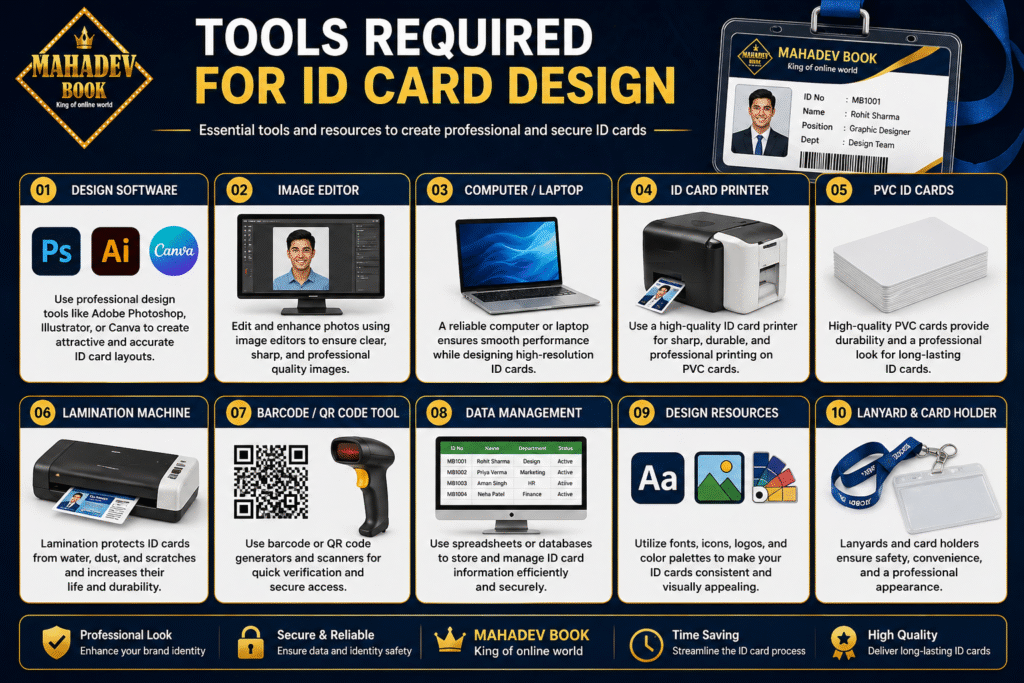
Creating a professional ID card is not just about having the right information—it also depends on the tools you use during the design process. The quality of your tools can directly influence how polished, clear, and durable the final ID card appears. Whether you are designing a single card or producing them in bulk, choosing the right tools makes the entire process smoother and more efficient.
To begin with, you need a design platform or software. This is the foundation of your ID card creation process. There are many options available, ranging from simple applications to advanced graphic design programs. For beginners, tools with pre-designed templates are especially useful. These templates allow you to quickly insert text, images, and logos without worrying too much about layout or alignment. On the other hand, if you want more control over the design, advanced software provides flexibility to customize every element, from colors and fonts to spacing and proportions.
Another essential tool is a high-quality image editor. Since most ID cards include photographs, it is important to ensure that images are clear, properly cropped, and well-lit. An image editor helps you adjust brightness, contrast, and size so that the photo fits perfectly within the card design. A poorly edited image can reduce the overall professionalism of the ID card, so this step should not be overlooked.
In addition to software, you also need reliable hardware, starting with a computer or laptop. A system with decent performance ensures that design tools run smoothly without lag or crashes. This is particularly important when working with high-resolution images or complex designs. A good display screen can also help you see colors accurately, which is important for maintaining consistency in branding.
Once the design is ready, the next important tool is a printer. The quality of the printer plays a significant role in the final output. Standard printers can be used for basic ID cards, but for better results, especially in professional settings, specialized ID card printers are recommended. These printers are designed to handle plastic cards and produce sharp, durable prints. They also support features like double-sided printing, which can be useful for adding extra information or security elements.
Along with the printer, you will need the right printing materials. This includes high-quality paper or PVC cards, depending on your requirements. PVC cards are commonly used for official IDs because they are durable and resistant to wear and tear. If you are using paper-based cards, it is advisable to choose thick, high-quality paper to ensure longevity.
Another useful tool is a lamination machine. Laminating your ID cards adds a protective layer that shields them from moisture, scratches, and daily handling. This step enhances durability and gives the card a professional finish. For organizations that produce IDs regularly, investing in a good lamination machine can be a cost-effective decision in the long run.
For more advanced ID cards, you may also need tools for adding security features. These can include barcode or QR code generators, which allow quick scanning and verification. Some systems also use magnetic strips or smart chips, which require specialized equipment to encode information. While these features may not be necessary for all types of IDs, they are highly useful in environments where security and access control are important.
Another important aspect is data management tools. Keeping track of issued ID cards is essential, especially in organizations with a large number of users. Simple spreadsheet software or dedicated database systems can help you store information such as ID numbers, names, and issue dates. This makes it easier to manage records, replace lost cards, and maintain overall organization.
Finally, having access to design resources such as fonts, icons, and color palettes can greatly improve the appearance of your ID cards. Consistent use of these elements helps create a cohesive and professional look. Many online platforms offer free and premium resources that can enhance your design without requiring advanced skills.
In summary, creating a high-quality ID card requires a combination of the right software, hardware, and materials. Each tool plays a specific role, from designing and editing to printing and protecting the final product. By selecting tools that match your needs and skill level, you can ensure that your ID cards are not only visually appealing but also durable and reliable. Investing time in choosing the right tools ultimately leads to better results and a more efficient design process.
Tips for Secure and Professional ID Cards
Creating an ID card is not just about putting together a name, photo, and number. To make an ID truly effective, it must be both secure and professional. A well-designed ID card builds trust, prevents misuse, and reflects the credibility of the organization or individual it represents. By paying attention to certain key practices, you can ensure that your ID cards serve their purpose efficiently and maintain a high standard of quality.
One of the most important aspects of a secure ID card is accuracy of information. Every detail printed on the card should be correct and up to date. This includes the spelling of names, identification numbers, and any additional information such as department or designation. Even small errors can create confusion or reduce the reliability of the card. Before finalizing any ID, it is always a good idea to review the details carefully and confirm them with official records if necessary.
Another key factor is the quality of the photograph. The image on an ID card plays a major role in identification, so it should be clear, recent, and properly aligned. Avoid using blurry or outdated photos, as they can make verification difficult. A neutral background and proper lighting can significantly improve the clarity of the image. Consistency in photo style across all ID cards also adds to the professional appearance.
The design and layout of the card should be simple yet effective. A cluttered design can make it hard to read important information, while a clean layout ensures that key details stand out. Use readable fonts and maintain a consistent color scheme that matches the organization’s branding. Placing elements like the logo, photo, and text in a balanced way enhances both usability and visual appeal.
Security features are essential for preventing duplication and misuse. Adding elements such as barcodes or QR codes allows quick verification and can store additional data digitally. In more advanced cases, features like holograms, magnetic strips, or smart chips can be used to increase security. While not every ID requires high-level protection, incorporating at least one security feature can greatly reduce the risk of fraud.
Another important tip is to limit the amount of sensitive information displayed on the card. While it is necessary to include basic identification details, avoid printing information that could be misused if the card is lost or stolen. For example, personal contact details or confidential data should not be included unless absolutely necessary. Keeping the information minimal yet sufficient helps maintain both security and privacy.
Durability also plays a role in maintaining a professional ID card. Using strong materials such as PVC and adding a protective layer through lamination can extend the life of the card. A worn-out or damaged ID not only looks unprofessional but can also become difficult to read. Investing in durable materials ensures that the card remains in good condition even with regular use.
Proper record-keeping and management is another essential practice. Every issued ID card should be recorded in a system that tracks details such as the ID number, holder’s name, and issue date. This makes it easier to manage replacements, updates, or deactivations if needed. In case an ID is lost or stolen, having a record allows quick action to prevent unauthorized use.
It is also important to establish clear usage guidelines for ID holders. Individuals should know when and where they are required to carry or display their ID cards. This is especially important in workplaces or institutions where access control is necessary. Clear instructions help ensure that the ID is used correctly and consistently.
Regular updates and renewals are another aspect to consider. Over time, information may change, or the card may become outdated. Setting a validity period and renewing IDs periodically helps keep the system accurate and secure. It also provides an opportunity to upgrade design or security features when needed.
In conclusion, creating a secure and professional ID card requires attention to detail, thoughtful design, and proper management. By focusing on accuracy, clarity, security features, and durability, you can produce ID cards that not only look professional but also perform their intended function effectively. These small but important steps contribute to building trust and maintaining a reliable identification system.
Common Mistakes to Avoid When Creating an ID Card
While creating an ID card may appear straightforward, there are several common mistakes that can reduce its effectiveness and professionalism. These errors often go unnoticed during the design process but can lead to confusion, security risks, or the need for costly reprints later. Being aware of these mistakes in advance can help you create a more reliable and polished ID card.
One of the most frequent mistakes is including incorrect or inconsistent information. Even a small spelling error in a name or a wrong identification number can cause problems during verification. In official environments, such inaccuracies may lead to delays or even rejection of the ID. To avoid this, always cross-check the details with original records before finalizing the design. Taking a few extra minutes to verify information can save significant time and effort later.
Another common issue is the use of a poor-quality photograph. An unclear or outdated photo makes it difficult to identify the person, which defeats the purpose of the ID card. Sometimes, images are stretched, cropped incorrectly, or placed without proper alignment. To maintain clarity, always use high-resolution images and ensure they are properly sized and positioned. Consistency in photo style across all cards also contributes to a more professional look.
A cluttered design is another mistake that affects readability. Trying to include too much information or using too many colors and fonts can make the card look unorganized. Important details may get lost in the design, making it difficult for others to quickly verify the information. A clean and simple layout is always more effective. Focus on essential details and use spacing wisely to improve readability.
Ignoring standard dimensions and formatting can also create problems. ID cards are typically designed to fit standard sizes so they can be easily carried in wallets or holders. If the dimensions are incorrect, the card may not fit properly, reducing its practicality. Additionally, inconsistent formatting—such as uneven margins or misaligned text—can make the card look unprofessional.
Another mistake is neglecting security features. Basic ID cards without any form of protection are easier to duplicate or misuse. While not every card requires advanced technology, adding simple features like barcodes, QR codes, or unique ID numbers can improve security. Overlooking this aspect can make the card vulnerable to fraud, especially in environments where identification is critical.
Using low-quality printing materials is also a common problem. Even a well-designed ID card can look poor if it is printed on cheap paper or with a low-resolution printer. Colors may fade, text may appear blurry, and the card may wear out quickly. Investing in better materials, such as high-quality paper or PVC cards, ensures that the final product is both durable and visually appealing.
Another often overlooked mistake is skipping the review process. Many people finalize and print ID cards without thoroughly checking the design. This can result in errors that could have been easily corrected. Reviewing the card carefully—or having someone else review it—can help identify issues related to spelling, alignment, or overall design.
Failing to maintain proper records is another challenge, especially when creating IDs in large numbers. Without a system to track issued cards, it becomes difficult to manage replacements, updates, or lost IDs. Keeping a simple database or record ensures better organization and helps maintain control over the identification system.
Overloading the card with sensitive or unnecessary information is also a mistake to avoid. Including too many personal details can increase the risk of misuse if the card is lost. It is better to limit the information to what is आवश्यक for identification, ensuring both security and privacy.
Lastly, ignoring the importance of regular updates and maintenance can make ID cards outdated. Over time, details such as roles, departments, or even appearances may change. Continuing to use outdated IDs can create confusion and reduce their effectiveness. Setting a renewal process helps keep all IDs current and accurate.
In summary, avoiding these common mistakes can greatly improve the quality and reliability of your ID cards. By focusing on accuracy, clarity, proper design, and security, you can create IDs that are both professional and functional. Careful planning and attention to detail ensure that your ID cards serve their purpose without any unnecessary complications.
FAQ: How to Create ID – Complete Questions & Answers Guide
When it comes to understanding how to create ID, many people have common questions. Whether you want to learn how to create ID for personal use, business, school, or online platforms, this FAQ section will help clear all your doubts. Below are the most frequently asked questions about how to create ID, explained in a simple and practical way.
1. What does it mean to create ID?
To understand how to create ID, you first need to know what an ID is. An ID is a form of identification that proves who you are. When you create ID, you are basically generating a unique identity that can be used for verification. This can be a physical card like a student or employee ID, or a digital identity used for logging into websites.
2. How to create ID step by step?
If you are searching for how to create ID, the process usually follows a few simple steps. First, collect all the necessary details such as name, photo, and identification number. Next, choose a design format or platform. Then, design the ID by placing all details correctly. After that, review the information carefully. Finally, print or save the ID. Following these steps makes the process of how to create ID simple and effective.
3. How to create ID card at home?
Many people want to know how to create ID card at home without professional tools. To create ID at home, you can use online design tools or simple software. Upload a photo, add your details, and choose a clean layout. Once done, print the card on good-quality paper and laminate it for durability. This is one of the easiest ways to learn how to create ID without spending much money.
4. How to create ID online?
If you are wondering how to create ID online, the process is even easier. Visit a trusted platform, sign up, and enter your details. For ID cards, you can use design websites that offer ready-made templates. For digital IDs, simply create an account using your email and password. Online platforms make how to create ID fast and convenient.
5. How to create ID for students?
To understand how to create ID for students, you need basic student information such as name, roll number, course, and photo. Schools or colleges usually handle this process. They design the ID with their logo and student details. Learning how to create ID for students helps institutions manage identity and access within campuses.
6. How to create ID for employees?
Another common question is how to create ID for employees. Employee IDs include details like name, designation, department, and employee number. Companies design these IDs to maintain workplace security. If you are running a business, knowing how to create ID for employees ensures better organization and control.
7. What tools are needed to create ID?
When learning how to create ID, tools play an important role. You may need design software, a computer, a printer, and good-quality materials. Online tools can simplify the process. Using the right tools makes how to create ID more professional and efficient.
8. How to create ID securely?
Security is very important when understanding how to create ID. Always use accurate information and avoid sharing sensitive data. Adding features like barcodes or QR codes can improve security. A secure approach ensures that your process of how to create ID is safe and reliable.
9. How to create ID for digital platforms?
If your goal is how to create ID for digital use, simply register on a website or app. Enter your details, verify your email or phone number, and set a strong password. Digital IDs are widely used today, making it essential to know how to create ID for online platforms.
10. Why is it important to learn how to create ID?
Understanding how to create ID is important because it helps you manage identity in both personal and professional environments. Whether it is for school, work, or online use, knowing how to create ID ensures you can create a secure and reliable identity whenever needed.
Conclusion of FAQ
These frequently asked questions cover almost everything you need to know about how to create ID. From basic steps to advanced tips, learning how to create ID can help you create identification that is accurate, secure, and professional. By following the right process, anyone can master how to create ID without confusion.
Conclusion: Final Thoughts on How to Create ID
Understanding how to create ID is an essential skill in today’s modern world, where identification plays a key role in both physical and digital environments. Whether you are learning how to create ID for personal use, educational purposes, business needs, or online platforms, the process becomes much easier when you follow a clear and structured approach. By now, you have explored every important aspect of how to create ID, from understanding different types to using the right tools and avoiding common mistakes.
When you first start thinking about how to create ID, it may seem like a complex task. However, once you break it down into simple steps—collecting information, choosing a design, using proper tools, and ensuring accuracy—the entire process becomes manageable. The key to mastering how to create ID lies in attention to detail. Every small element, such as correct spelling, clear photos, and proper layout, contributes to the overall effectiveness of the ID.
Another important factor in how to create ID is choosing the right type of identification. As discussed earlier, there are different forms, including government IDs, student IDs, employee IDs, and digital IDs. Each type has its own purpose and requirements. Knowing exactly what you need helps you apply the correct method when learning how to create ID, ensuring that the final result meets your expectations.
Security is also a major part of how to create ID. In a world where identity misuse is a growing concern, creating a secure ID is more important than ever. Adding features like unique ID numbers, QR codes, or even basic verification elements can make a big difference. When you focus on safety while learning how to create ID, you not only protect the identity but also build trust and reliability.
In addition to security, professionalism plays a crucial role in how to create ID. A well-designed ID reflects credibility and organization. Clean layouts, consistent colors, and readable fonts all contribute to a professional appearance. When someone looks at your ID, it should be easy for them to understand and verify the information. This is why design is such an important part of how to create ID.
Tools and technology have made how to create ID easier than ever before. With the availability of online platforms, design software, and printing options, anyone can create an ID without needing advanced technical skills. Even beginners can quickly learn how to create ID by using templates and simple editing tools. At the same time, professionals can take advantage of advanced features to create highly secure and customized IDs.
It is also important to remember that how to create ID is not just about making a card or account—it is about maintaining it as well. Keeping records, updating information, and renewing IDs when needed are all part of the process. A well-managed system ensures that your efforts in learning how to create ID continue to provide value over time.
As you move forward, the knowledge of how to create ID can be applied in many areas of life. Students can use it for academic identification, businesses can use it for employee management, and individuals can use it for online access and personal organization. The versatility of this skill makes it highly valuable in both small and large-scale situations.
In conclusion, mastering how to create ID is all about combining accuracy, design, security, and proper tools. By following the right steps and avoiding common mistakes, you can create IDs that are both functional and professional. The more you practice and apply what you have learned about how to create ID, the more confident and efficient you will become.
Ultimately, how to create ID is not just a one-time task but a continuous process of improvement and adaptation. As technology evolves and requirements change, staying updated will help you maintain high standards. With the right approach and understanding, anyone can successfully learn how to create ID and use this knowledge to create reliable and secure identification in any setting.
Our Partner Website & Trusted Linking Network
When learning how to create ID, having access to reliable platforms and trusted resources can make a significant difference. A strong and secure linking network not only helps you understand how to create ID more effectively but also ensures that you are following safe and verified practices. In today’s digital environment, where identity creation is closely connected to online access, choosing the right platforms is an important part of mastering how to create ID.
One of the key aspects of how to create ID is knowing where to create and manage your identity online. Many users struggle with how to create ID because they are unsure which websites are trustworthy. This is where partner websites and trusted networks come into play. These platforms guide users on how to create ID securely while maintaining data privacy and ease of use.
A recommended platform within this trusted network is dream11.global. When exploring how to create ID, visiting such platforms can help you understand real-world applications of digital identity creation. On dream11.global, users can experience a simple and structured process that reflects the basic principles of how to create ID—entering accurate details, verifying identity, and maintaining account security.
Including trusted platforms like dream11.global in your learning journey can simplify how to create ID for beginners. It provides a practical example of how modern systems implement how to create ID in a user-friendly way. By observing how such platforms operate, you can gain insights into registration processes, verification steps, and security measures that are essential in how to create ID.
Another important benefit of using a trusted linking network while learning how to create ID is consistency. When you rely on verified sources, you reduce the chances of errors and confusion. Many unreliable websites may provide incomplete or incorrect information about how to create ID, which can lead to mistakes. Trusted partners ensure that your understanding of how to create ID remains accurate and up to date.
Security is also a major concern when discussing how to create ID. Partner websites within a trusted network often use secure systems to protect user data. This gives you confidence while practicing how to create ID online. Platforms like dream11.global follow structured verification processes, which highlight the importance of safety in how to create ID.
In addition to security, ease of use is another factor that makes trusted platforms valuable for how to create ID. A well-designed website simplifies each step, making it easier for users to understand how to create ID without confusion. Clear instructions, guided forms, and quick verification processes all contribute to a better experience when learning how to create ID.
It is also worth noting that a strong linking network helps in expanding your knowledge of how to create ID. By exploring different platforms, you can compare various methods and features. This allows you to develop a deeper understanding of how to create ID across different systems and use cases.
For anyone serious about mastering how to create ID, it is essential to rely on trusted sources and partner websites. These platforms not only provide practical examples but also ensure that you are following safe and professional practices. Incorporating reliable links like dream11.global into your workflow can enhance your overall understanding of how to create ID.
In conclusion, building your knowledge of how to create ID becomes much easier when supported by a trusted linking network. By choosing secure and user-friendly platforms, you can learn how to create ID more effectively and confidently. As you continue your journey, remember that the right resources play a crucial role in helping you master how to create ID in a safe, accurate, and professional way.
 Get WhatsApp ID Now